I started writing this in the Glovebox thread a couple nights ago, but decided to break it out into a separate thread because it's a broader topic.
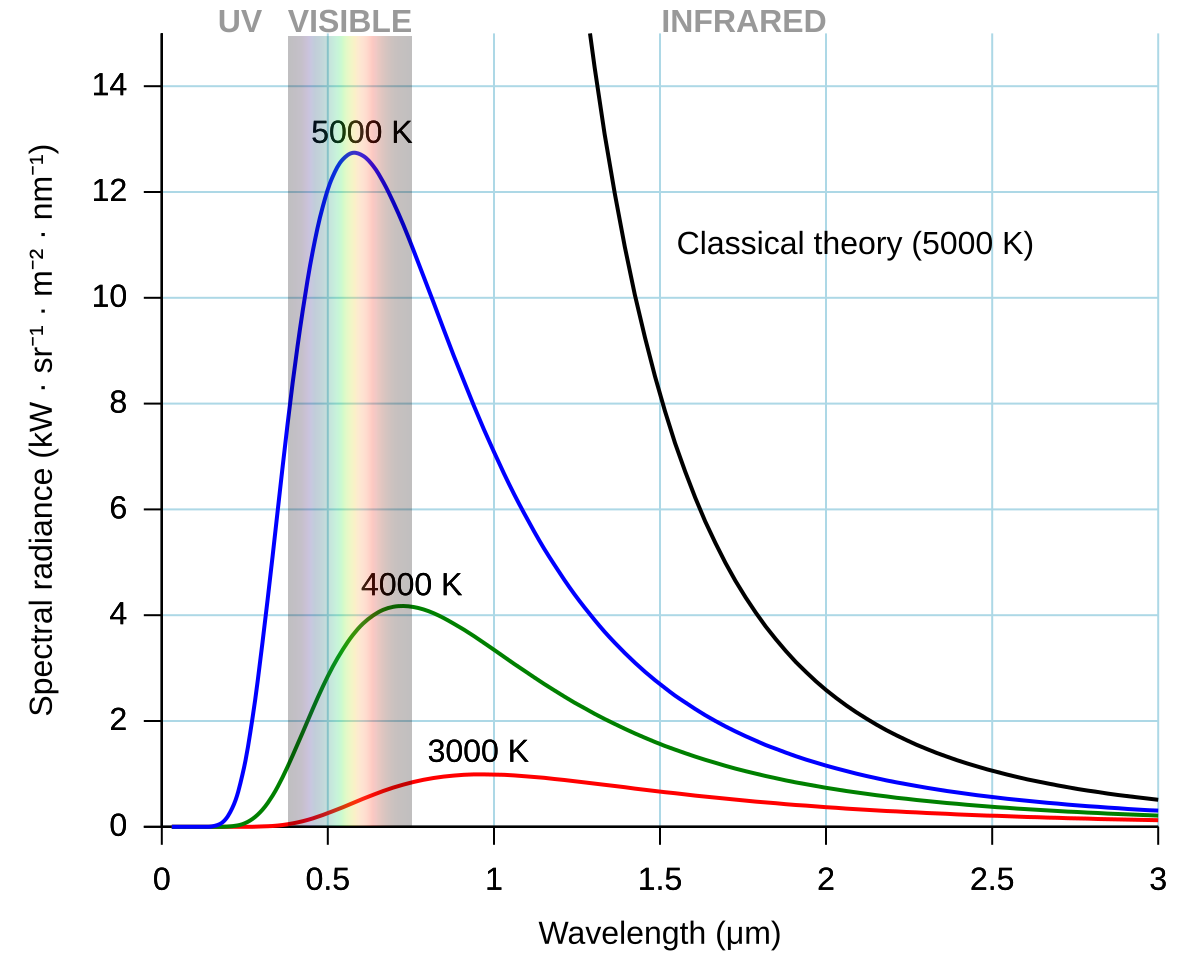
One point I'll emphasize about lighting in general that doesn't get talked about enough is that as you increase the brightness of your illumination source, the color temperature should rise with it. If you don't, you'll get this effect of everything looking dingy, like you're living life through a Mexican filter. It's the inverse effect of how dim task lighting looks horrible, like an abandoned hospital in a zombie movie, or "cool white" bulbs that aren't as bright as the sun in the interior of your car.
If you ever wondered why 6500K is considered "daylight white" when actual high noon sunlight doesn't remotely resemble that distinctly blue hue in a bulb, it's because the lumen output from the sun is many magnitudes greater than what any light bulb can safely produce in an electrical socket. The sun laughs at your 2000 lumen household bulb or 200 lumen automotive interior bulb. Have you heard of an octillion? How about 35 of them?
So what does this mean in terms of lighting up the interior of a car? Whether you're in a car or your home, there's a fence at around 3500K where comfort and ambiance lie on one side and task-oriented productivity is on the other. You're transitioning from being in a mood to getting stuff done.
If you want to keep a stock interior lighting appearance but brighter, 3000K should be your target as long as you don't increase the total brightness too much. If you do, you'll end up in no man's land where you should bump up the color temperature more, but will have a hard time doing so. 3500K T10/194 bulbs are almost unheard of. 4000K is not common even though they exist. 5000K is more common, but still not a typical color temperature in automotive. The automotive lighting world is standardized around 6000K being "white" while there's no standard for warm white.
In my car, I drastically increased the brightness of the light in every interior bulb socket except the gear indicator (because a future shift boot tells me not to bother). I also have a gray interior. Sticking with 3000K after increasing the brightness as much as I have would have been terrible. I don't want the Mexican filter inside my car.
With my decor choices and task-centricity in mind, I went with 6000K everywhere inside when 6000K and 6500K were all that you could find 15 years ago. I bought and tried out a lot of LED bulbs to make sure what I had wasn't 6500K. My dome and map lights now are probably between 6000K and 6500K and they're a bit too cool for my liking. They're also old, which means they're probably nowhere near as bright as modern LED bulbs from VLEDS. Maybe I'll add a goal of finally replacing all the 6000K bulbs with 5500K or 5000K to the growing winter task list.
My personal lighting decor philosophy is two-fold: I want to see inside my car at night when I turn the lights on, especially if I'm trying to find something that might get lost in the shadows. It's extremely task-oriented. I'm not trying to set a mood. So what about all the interior lighting being too bright if you turn on the dome light while driving and knock yourself out with glare? Just use one or both map lights instead. Also, I generally don't like warm light unless it's candlelight, which is clearly a mood, and you'd better not be lighting candles for ambiance in a car.
The other point is that as we age, we're subject to presbyopia, which is worsened by dim lighting. You know the deal—flashlights and reading glasses in dimly lit restaurants to read menus and write tips on credit card receipts. Ambiance goes out the window when I have to read. Give me more light, make it bright, and increase the color temperature accordingly for the desired brightness.
One point I'll emphasize about lighting in general that doesn't get talked about enough is that as you increase the brightness of your illumination source, the color temperature should rise with it. If you don't, you'll get this effect of everything looking dingy, like you're living life through a Mexican filter. It's the inverse effect of how dim task lighting looks horrible, like an abandoned hospital in a zombie movie, or "cool white" bulbs that aren't as bright as the sun in the interior of your car.
If you ever wondered why 6500K is considered "daylight white" when actual high noon sunlight doesn't remotely resemble that distinctly blue hue in a bulb, it's because the lumen output from the sun is many magnitudes greater than what any light bulb can safely produce in an electrical socket. The sun laughs at your 2000 lumen household bulb or 200 lumen automotive interior bulb. Have you heard of an octillion? How about 35 of them?
To illustrate an example of what I've seen with color temperature and brightness, I have this basic traditional shaded foyer chandelier that I tried to fit into my builder's barebones lighting budget when I bought my house years ago. It supports 9 E12 candelabra bulbs. With the original incandescent bulbs, the light output was dim and yellow at around 4000 lumens of 2700K incandescent light. 4000 lumens is great for a medium bedroom, but underpowered for a two-story foyer. 2700K is also not a great color for a grand entrance or task lighting. It belongs in a living room, or perhaps most commonly, a nightstand lamp.
A few years later, I added E12-E26 adapters so that I now have 9 E26 3000K LEDs producing 800 lumens each for a total of 7200 lumens. It's sufficiently bright now, but it still looks dingy even though I actually increased the color temperature slightly from 2700K to the standard "cooler than incandescent" residential LED color temperature of 3000K.
I just bought a new industrial farmhouse chandelier that I've yet to install, but it has 7 E26 sockets and I'm putting in 1500 lumen (100W equivalent), 3500K LED filament bulbs for a total of 10,500 lumens, which is a lot in an interior residential space. I'm even considering whether to add a dimmer once it's installed. For color temperature, 3500K is about as high as I can realistically go for any room with walnut-colored hardwood floors. 4000K and darker floors generally don't mix unless you throw way more lumens at the problem. I'll see how it turns out, but I already went to 3500K in my dining room and hallway, so I expect it to meet my expectations.
A few years later, I added E12-E26 adapters so that I now have 9 E26 3000K LEDs producing 800 lumens each for a total of 7200 lumens. It's sufficiently bright now, but it still looks dingy even though I actually increased the color temperature slightly from 2700K to the standard "cooler than incandescent" residential LED color temperature of 3000K.
I just bought a new industrial farmhouse chandelier that I've yet to install, but it has 7 E26 sockets and I'm putting in 1500 lumen (100W equivalent), 3500K LED filament bulbs for a total of 10,500 lumens, which is a lot in an interior residential space. I'm even considering whether to add a dimmer once it's installed. For color temperature, 3500K is about as high as I can realistically go for any room with walnut-colored hardwood floors. 4000K and darker floors generally don't mix unless you throw way more lumens at the problem. I'll see how it turns out, but I already went to 3500K in my dining room and hallway, so I expect it to meet my expectations.
So what does this mean in terms of lighting up the interior of a car? Whether you're in a car or your home, there's a fence at around 3500K where comfort and ambiance lie on one side and task-oriented productivity is on the other. You're transitioning from being in a mood to getting stuff done.
If you want to keep a stock interior lighting appearance but brighter, 3000K should be your target as long as you don't increase the total brightness too much. If you do, you'll end up in no man's land where you should bump up the color temperature more, but will have a hard time doing so. 3500K T10/194 bulbs are almost unheard of. 4000K is not common even though they exist. 5000K is more common, but still not a typical color temperature in automotive. The automotive lighting world is standardized around 6000K being "white" while there's no standard for warm white.
In my car, I drastically increased the brightness of the light in every interior bulb socket except the gear indicator (because a future shift boot tells me not to bother). I also have a gray interior. Sticking with 3000K after increasing the brightness as much as I have would have been terrible. I don't want the Mexican filter inside my car.
With my decor choices and task-centricity in mind, I went with 6000K everywhere inside when 6000K and 6500K were all that you could find 15 years ago. I bought and tried out a lot of LED bulbs to make sure what I had wasn't 6500K. My dome and map lights now are probably between 6000K and 6500K and they're a bit too cool for my liking. They're also old, which means they're probably nowhere near as bright as modern LED bulbs from VLEDS. Maybe I'll add a goal of finally replacing all the 6000K bulbs with 5500K or 5000K to the growing winter task list.
My personal lighting decor philosophy is two-fold: I want to see inside my car at night when I turn the lights on, especially if I'm trying to find something that might get lost in the shadows. It's extremely task-oriented. I'm not trying to set a mood. So what about all the interior lighting being too bright if you turn on the dome light while driving and knock yourself out with glare? Just use one or both map lights instead. Also, I generally don't like warm light unless it's candlelight, which is clearly a mood, and you'd better not be lighting candles for ambiance in a car.
The other point is that as we age, we're subject to presbyopia, which is worsened by dim lighting. You know the deal—flashlights and reading glasses in dimly lit restaurants to read menus and write tips on credit card receipts. Ambiance goes out the window when I have to read. Give me more light, make it bright, and increase the color temperature accordingly for the desired brightness.