The Unofficial "Ask a Stupid Question" Thread

I'm looking at PBRs for Gold Bird right now on RA, and looking at the reman units, how does one get the core charge back? Like, I know for the core charges you gotta send the old units back to get that money back, but this is an online store, so my questions really are:

  • Do you pay for return shipping?
    • If so, is the cost of shipping even worth sending back the old units?
    • If you are close to a RA warehouse, do they let you walk it in for return in-person?
  • Do they care if I'm sending back single piston units for a t-bird?
  • Are reman units just as good as brand new units?
    • This questions comes about because I purchased the caliper brackets separately and just now realizing that the "new" units already come with a caliper bracket whereas not all reman units come with the caliper bracket
 
You will have to ship the cores back to Rockauto. They will give you a shipping label, but they will deduct the shipping cost from your return, so whatever the shipping cost is when you buy it, plan on a similar return shipping charge to determine what you would actually receive back. Whether they would care about receiving tbird calipers back, I have no idea, but I know the local Advance Auto/Autozone type places don’t care, so I have always gone that route for the PBR upgrade.
 
If you have 17" wheels, I could make you a deal on cobra calipers...
 
You will have to ship the cores back to Rockauto. They will give you a shipping label, but they will deduct the shipping cost from your return, so whatever the shipping cost is when you buy it, plan on a similar return shipping charge to determine what you would actually receive back. Whether they would care about receiving tbird calipers back, I have no idea, but I know the local Advance Auto/Autozone type places don’t care, so I have always gone that route for the PBR upgrade.

This is good to know!

If you have 17" wheels, I could make you a deal on cobra calipers...

Negative, this is for Gold Bird. Dirty Bird, formerly known as Pearl to my kids, is getting the ATS-V calipers
 
I bought a reman set of calipers off rockauto years ago. When returning the core they gave me the option to generate a label, or ship them myself. I went with their label and shipped them back. After the shipping label was deducted I ended up only getting ~$7 each caliper. Not really worth the trouble, I just buy new now when I can.

Technically they need to be the same caliper returned to get a core charge back. Local part stores usually don't inspect core charges because they DGAF. Mailing the wrong core back to one of rockautos partners I would assume is more likely to become an issue.
 
So I'm comparing prices right now between the big 3 parts stores in my area, AutoZone, O'Reilly, and NAPA and comparing them to RockAuto. After shipping and tax, RockAuto is cheaper than the big 3 by a significant margin.
  • AutoZone: $76 + $35 core (reman units, no pads)
  • O'reilly: $91 + $40 core (new, no pads)
  • NAPA: $98 + $60 core (reman units, no pads)
I'm also finding out I boned myself with the caliper bracket. I spent $25/side for the caliper bracket already and am just now realizing that even some of the cheaper calipers already HAVE a caliper bracket! So, I'm purposefully looking for calipers without the caliper bracket, which seem to only be the reman units listed on RA. FML, lol.
In terms of the core charge, another stupid question I have with RA is... How long do they give you to return parts before you can't return them anymore?
 
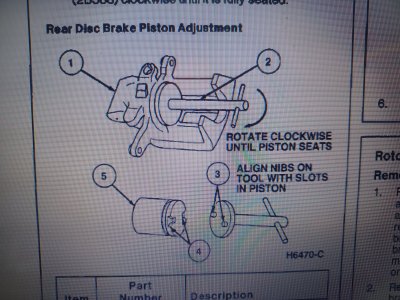
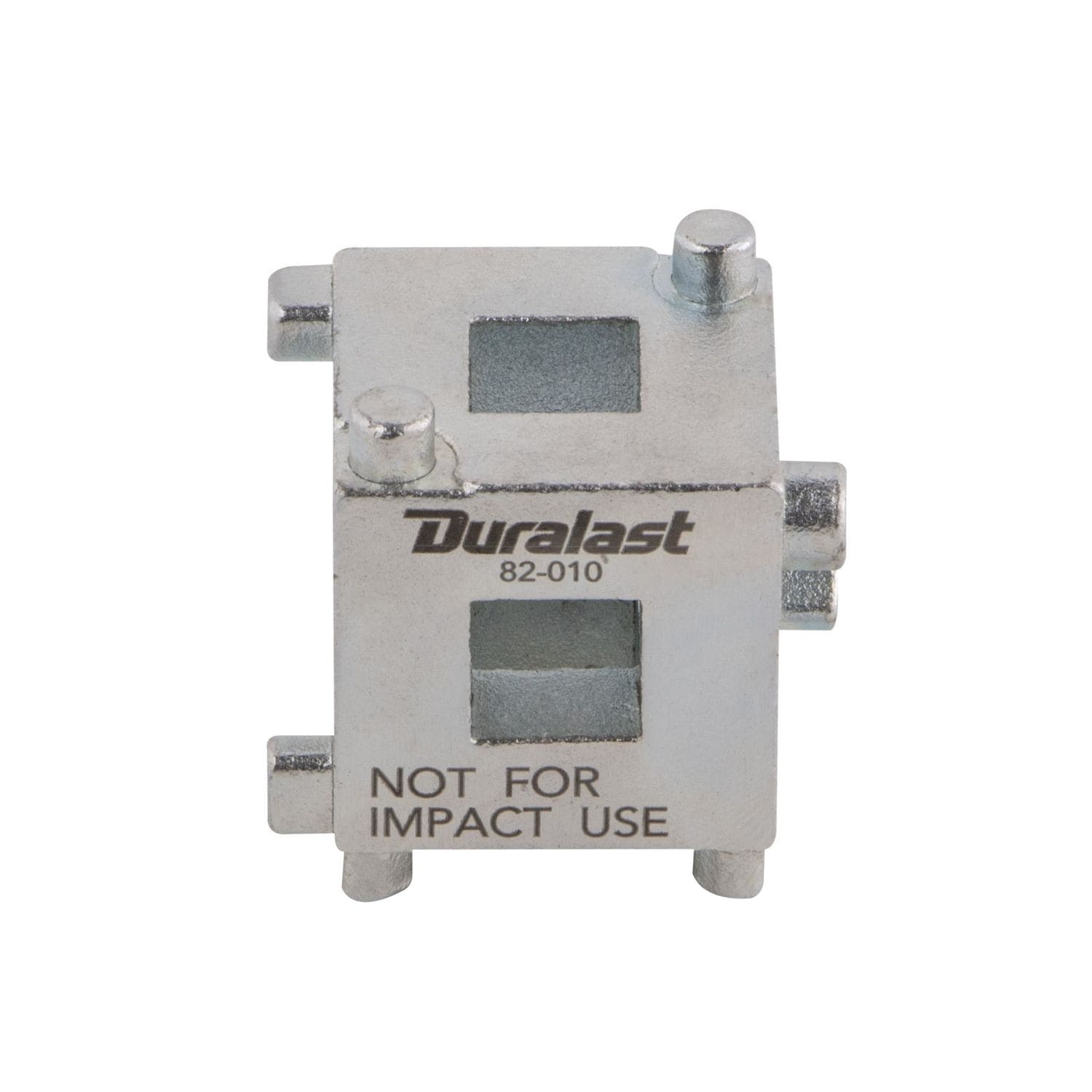
What does one use if one doesn't have this tool?

View attachment 17338

This if you hate yourself 😆

 
Could it only happen on one side?
Yes! The Excursion was not lighting the left rear and when in service bay it worked fine. As they were backing it out and stopped I noticed the right was lit and left was not. They were like well I'll be damned. They were suprised but immediately went to the mfs.
 
What does one use if one doesn't have this tool?

View attachment 17338
Open the bleeder screw and channel locks griping outside of piston to screw it in. It is a bitch unless you open the bleeder. I have used needle nose pliers but that is dangerous so I don't recommend that.
 
Anyone happen to know of the passenger door cylinder should both lock and unlock the door? I'm only getting lock. I have the end with the U up and zig zag down..
 
So I'm comparing prices right now between the big 3 parts stores in my area, AutoZone, O'Reilly, and NAPA and comparing them to RockAuto. After shipping and tax, RockAuto is cheaper than the big 3 by a significant margin.
  • AutoZone: $76 + $35 core (reman units, no pads)
  • O'reilly: $91 + $40 core (new, no pads)
  • NAPA: $98 + $60 core (reman units, no pads)
I'm also finding out I boned myself with the caliper bracket. I spent $25/side for the caliper bracket already and am just now realizing that even some of the cheaper calipers already HAVE a caliper bracket! So, I'm purposefully looking for calipers without the caliper bracket, which seem to only be the reman units listed on RA. FML, lol.
In terms of the core charge, another stupid question I have with RA is... How long do they give you to return parts before you can't return them anymore?
30 or 90 days; they will tell you before you commit to the purchase. They don't care what you send back, I did my PBR upgrade this way as well as the mustang rack. They do deduct shipping charges from your refund, you ship back in the same box they ship to you so no real trouble and still should come out better than AZ.
 
Brining this up one more time.

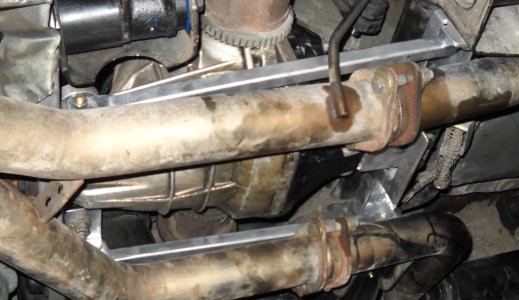
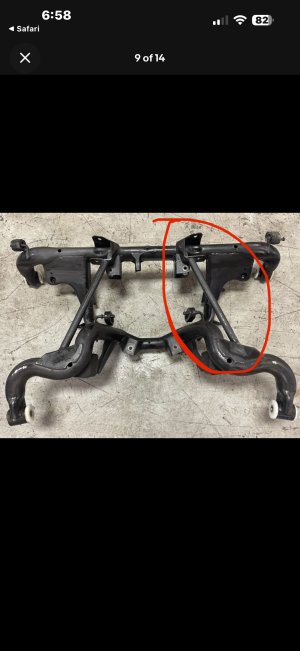
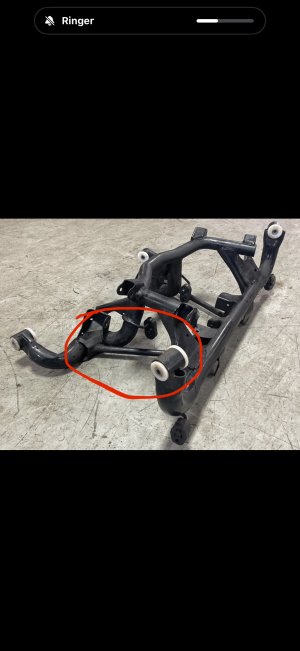
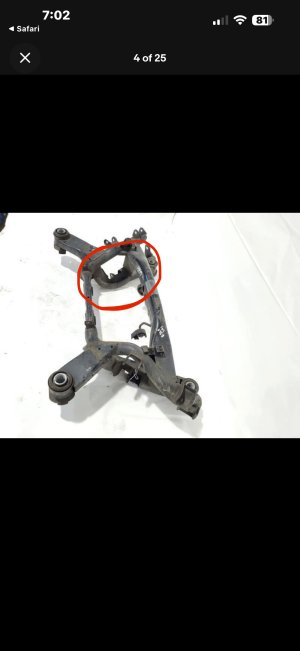
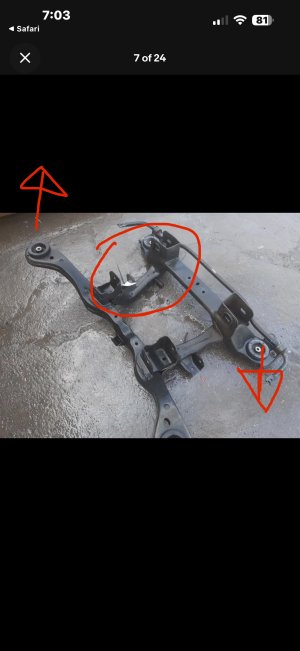
A while back I posted a picture from the FB group, in the picture the guy added some bars connecting the front to the rear of the IRS control arm points. To me it makes sense because it seems like it’ll aid in the twisting forces the IRS goes through.


IMG_6287.jpeg

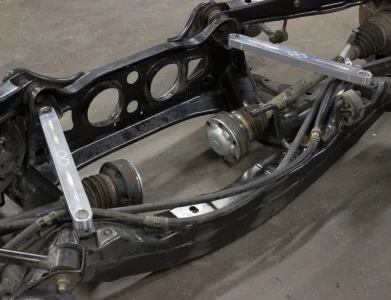
I’ve compiled a few examples of cars that have these “braces” or added frame from the factory.

First is the s550 mustang, pretty much the axle shaft goes THROUGH this eye sections.
IMG_0288.jpeg

Next is the 03-04 terminator cobra with the IRS, it clearly has 2 round tubes added to the lower control arm points.


IMG_0289.jpeg
IMG_0290.jpeg

Next up is the Lexus is300 from the early 2000’s, this bar is particular is bolted into place.
IMG_0243.webpIMG_0246.png

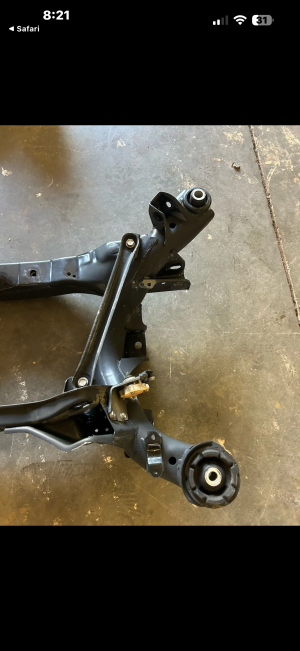
And last but not least, the last generation of the Thunderbird. It also has this same theme. My cheap knowledge of engineering would think, it ties all the contact points together so when the body tries to twist it holds it shape together. Unlike OUR IRS that only connects on the upper portion.

IMG_0292.jpeg

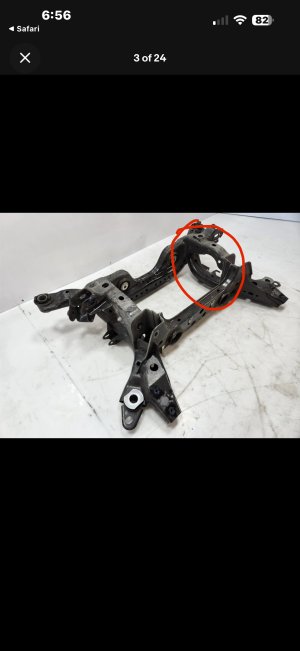
And finally it’s the mn12 subframe that shows only the upper portion of the frame, lower control arm points have no solid connection. I drew an up and down arrow on the opposite sides of the frame to try and show what I mean when I say “twist”

IMG_0294.jpeg

I need the big wigs in this question.
 
The question I ask you is what problem do you think this potential reduction in “twist” would solve?

But I have a few thoughts, the biggest elephant in the room being the IRS mounts won’t instill even a fraction of a millimeter of IRS subframe twist into the unibody it’s bolted to… which circles me back to the first question (further summarized) ; If it twists… so what?

Two the various suspensions bolted to these various IRS cradles are not equal. MN12s are still unique in all of these in that they use solid 1 piece true H arms for LCAs, the rest are multi link or trailering arm designs that have different load paths or more focused load paths into the pickup points than we do as our one piece LCAs spread out better.

Finally to state my psudo answer to the question I posited, the weakest point in our rear suspension system is its propensity to wheel hop under shock loads(like dumping the clutch in a manual car)… there have been countless numbers of braces reenforcements stitch welds etc one could add to the cradle that haven’t made much difference, but what has demonstratively been effective is stiffer bushings and nothing else. The cost of these is more NVH that OEMs don’t want, hence more complex solutions.

If I really really wanted to improve the factory IRS further than what we already have I’d look more at the more modern suspension designs than I would the stiffness of the stock cradle, which as far as I’m concerned is way more than adequate for the suspension attached to it.
 
The question I ask you is what problem do you think this potential reduction in “twist” would solve?

But I have a few thoughts, the biggest elephant in the room being the IRS mounts won’t instill even a fraction of a millimeter of IRS subframe twist into the unibody it’s bolted to… which circles me back to the first question (further summarized) ; If it twists… so what?

Two the various suspensions bolted to these various IRS cradles are not equal. MN12s are still unique in all of these in that they use solid 1 piece true H arms for LCAs, the rest are multi link or trailering arm designs that have different load paths or more focused load paths into the pickup points than we do as our one piece LCAs spread out better.

Finally to state my psudo answer to the question I posited, the weakest point in our rear suspension system is its propensity to wheel hop under shock loads(like dumping the clutch in a manual car)… there have been countless numbers of braces reenforcements stitch welds etc one could add to the cradle that haven’t made much difference, but what has demonstratively been effective is stiffer bushings and nothing else. The cost of these is more NVH that OEMs don’t want, hence more complex solutions.

If I really really wanted to improve the factory IRS further than what we already have I’d look more at the more modern suspension designs than I would the stiffness of the stock cradle, which as far as I’m concerned is way more than adequate for the suspension attached to it.
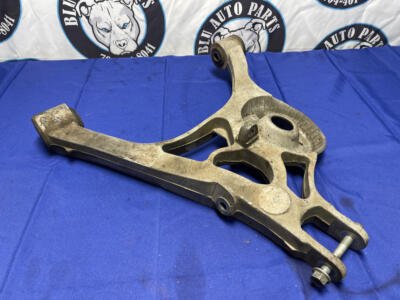
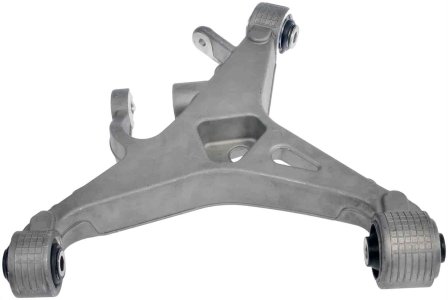
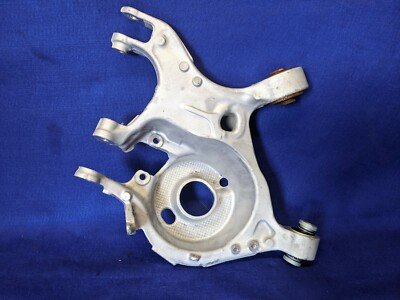
These are the rear lower control arms of the terminator, s550 and the newer Thunderbird. All of them are one big ass arm. I see what you mean about the load paths being transferred point to point THROUGH the arm tho, but since we have the same arm I don’t really see a difference besides they have that added reinforcements.
IMG_0296.jpeg

IMG_0297.jpeg
IMG_0295.jpeg


To your elephant in the room, your saying EVEN IF the subframe was stronger and less prone to twisting, it wouldn’t aid the rest of the unibody??

As in, I’m not talking about wheel hop, what I am trying to get at is…. Would stiffening the IRS help the UNIBODY itself from twisting?? Like aiding in structural integrity?? I know the rear of our cars rely heavily on the rear window for help along with the rear v brace. My reasoning is, if the IRS is stiffer it would transfer that strength to the rear end of the unibody??

IMG_0298.jpeg
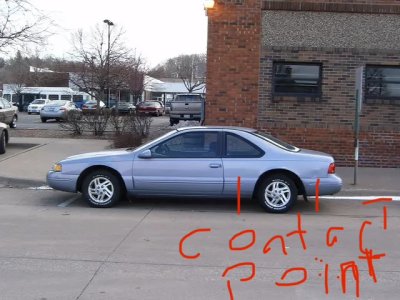
The contact points of the IRS align with the front and rear portions of the window. My thinking is, if the IRS becomes less prone to twist, would that help with the whole unibody from twisting also?? Atleast the rear portion?? Since we have a lack of subframe back there.

I know I bug with these type of questions but it’s just so interesting thinking about this type of stuff.
 
These are the rear lower control arms of the terminator, s550 and the newer Thunderbird. All of them are one big ass arm. I see what you mean about the load paths being transferred point to point THROUGH the arm tho, but since we have the same arm I don’t really see a difference besides they have that added reinforcements.
View attachment 17389

View attachment 17391
View attachment 17392


All of those arms only control up and down movement of the spindle where the MN12 arm controls both up down forward/back and twist. As a result they all have an extra link connecting a point on the spindle to a point on the cradle, which is likely why the cradles on them are dissimilar.

To your elephant in the room, your saying EVEN IF the subframe was stronger and less prone to twisting, it wouldn’t aid the rest of the unibody??

As in, I’m not talking about wheel hop, what I am trying to get at is…. Would stiffening the IRS help the UNIBODY itself from twisting?? Like aiding in structural integrity?? I know the rear of our cars rely heavily on the rear window for help along with the rear v brace. My reasoning is, if the IRS is stiffer it would transfer that strength to the rear end of the unibody??

View attachment 17393
The contact points of the IRS align with the front and rear portions of the window. My thinking is, if the IRS becomes less prone to twist, would that help with the whole unibody from twisting also?? Atleast the rear portion?? Since we have a lack of subframe back there.

I know I bug with these type of questions but it’s just so interesting thinking about this type of stuff.

Yes! Because the large bushings at each corner of it will absorb any and all twist in the IRS cradle before it’s ever deflected into the unibody.

I can already predict the next question(because I too have thought about it): Well what if the bushings are totally solid metal instead of compliant rubber or even to lesser extent UMMV? Then yes the cradle will transfer suspension/driveline loads into the unibody… but… if it is solidly mounted the IRS cradle being quite beefy might just itself completely unaltered act as a unibody brace, rendering any additional reenforcement ideas unnecessary.
 
All of those arms only control up and down movement of the spindle where the MN12 arm controls both up down forward/back and twist. As a result they all have an extra link connecting a point on the spindle to a point on the cradle, which is likely why the cradles on them are dissimilar.


Yes! Because the large bushings at each corner of it will absorb any and all twist in the IRS cradle before it’s ever deflected into the unibody.

I can already predict the next question(because I too have thought about it): Well what if the bushings are totally solid metal instead of compliant rubber or even to lesser extent UMMV? Then yes the cradle will transfer suspension/driveline loads into the unibody… but… if it is solidly mounted the IRS cradle being quite beefy might just itself completely unaltered act as a unibody brace, rendering any additional reenforcement ideas unnecessary.
Haha you’re a mind reader! I currently have aluminum mounts in mine.

That’s precisely what I was trying to say, it’s the IRS subframe itself a type of brace?? I didn’t know how to explain myself thank you.

So wouldn’t helping stiffen it up, stiffen up the rest of the body assuming it’s solid mount??

Either way I think I’m going to try and connect it down the road and see if I feel any difference driving it. I know you don’t believe in subframe connectors.
 
Haha you’re a mind reader! I currently have aluminum mounts in mine.

That’s precisely what I was trying to say, it’s the IRS subframe itself a type of brace?? I didn’t know how to explain myself thank you.

So wouldn’t helping stiffen it up, stiffen up the rest of the body assuming it’s solid mount??

Either way I think I’m going to try and connect it down the road and see if I feel any difference driving it.

The subframe isn’t a brace…. As intended. But if it’s solidly mounted on metal bushings is effectively a solidly part of the unibody structure, whether it benefits it substantially or not. I will firmly say though given its steel is literally twice the thickness of the unibody stampings it’s probably doing more than adding a few twigs between the LCA mounts.

There’s still the question of what I asked though; what problem would it solve? Beyond the challenge of maintaining composure from engine torque the IRS is far less critical when it comes to maintaining geometry than the front suspension and aa far as I’m concerned if you’ve got stiff bushings, good shocks and springs and an Addco back there any piece of brace you’re adding back there is ballast at best.


I know you don’t believe in subframe connectors.

That’s not true, well designed subframe connectors undoubtedly work, however I find *bolt in* connectors(which given these cars fuel tank are inherently stuck with) inherently compromised and a net zero or negative in vehicle performance for the weight and irritation they add.
 
Adding subframe connectors will make everything stiffer. Adding 300lbs to the car is not going to make it faster.
Rod , JL, dlf, and duffy all discussed all of this 20 years ago.
Between them, they came up with the bracing jl sold, the delrin irs bushings, and various other stuff that scp still sells.
I can't remember if that discussion was at sccoa or not.
 
Adding subframe connectors will make everything stiffer. Adding 300lbs to the car is not going to make it faster.
Rod , JL, dlf, and duffy all discussed all of this 20 years ago.
Between them, they came up with the bracing jl sold, the delrin irs bushings, and various other stuff that scp still sells.
I can't remember if that discussion was at sccoa or not.
Correct.
The discussion was on TCCoA.
I remember reading it a few times before deciding on what I wanted to do on bracing.

I would still love to buy a set of the full length subframe connectors like JL made. I could probably make some myself, but…eh. 🤷🏻‍♂️
 
Seems like racecougar had something to do with those braces; I remember him saying that he knew the guy that made them for jl.
 
The box between the IAC and intake tube, should there be anything in it?
I pulled the hoses apart and shining a flashlight in there it’s completely empty.
 
Well I think I found the cause of my standing wave then.
 
I am getting a squeaking noise from the alternator pulley. It goes away with a shot of wd40 but returns after a few days.

Any thoughts? I have never replaced the alternator due to it always working perfectly (14.0) but I have wanted to replace it, so I had the old one as a roadside backup to live in the trunk. I recall someone on the old site once mentioning there was a replacement with a "smaller footprint" and I wondered which one that might be. I am guessing my squeaking issue is the pulley, but I would like to replace both. Do they sell them with our pulley?
 

Similar threads

Back
Top